


 604-655-3727
 Call Now


Vinyl vs. Aluminum Windows in British Columbia: Which Is the Better Choice for Your Home?
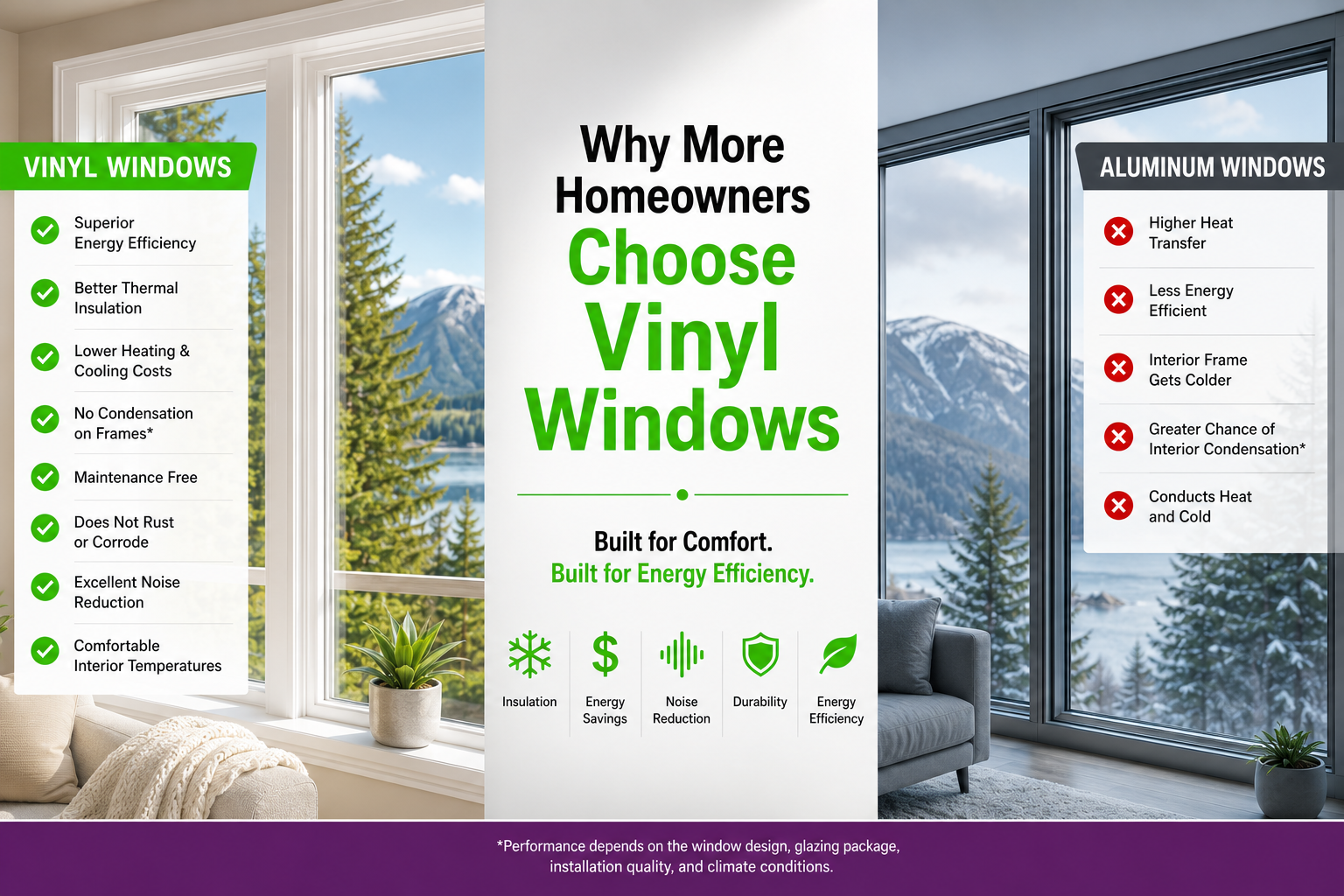
When choosing replacement windows for a home in British Columbia, two common frame materials are vinyl and aluminum. Both can provide excellent performance when properly designed and installed, but they differ significantly in thermal efficiency, maintenance requirements, and cost. Understanding these differences can help homeowners make an informed decision for their home and climate.
Vinyl vs. Aluminum Windows at a Glance
| Feature | Vinyl Windows | Aluminum Windows |
|---|---|---|
| Energy Efficiency | Excellent thermal insulation | Requires thermal breaks to achieve comparable performance |
| Thermal Comfort | Interior frames stay warmer | Frames can feel colder in winter |
| Condensation Resistance | Lower potential for condensation | Higher potential without advanced thermal breaks |
| Maintenance | No painting or refinishing required | May require maintenance over time |
| Corrosion Resistance | Will not rust or corrode | Can be affected by corrosion in some environments |
| Cost | Generally more cost-effective | High-performance systems are often more expensive |
| Noise Reduction | Multi-chamber frames help reduce sound transfer | Depends largely on glazing configuration |
| Frame Strength | Ideal for most residential applications | Excellent strength for larger openings |
Energy Efficiency: A Closer Look
One of the biggest differences between vinyl and aluminum windows is how the frame material handles heat transfer.
Vinyl is naturally a poor conductor of heat, making it an effective insulator. This helps reduce heat loss during winter and heat gain during summer, contributing to improved energy efficiency and indoor comfort.
Aluminum, by comparison, is a highly conductive material. Without thermal breaks, heat and cold can transfer more easily through the frame.
Better Thermal Comfort
Because vinyl frames transfer less heat, the interior surface of the frame typically remains closer to room temperature during colder months.
Advantages of Vinyl:
- Reduced heat transfer
- More comfortable indoor temperatures near windows
- Less sensation of cold around window openings
- Improved occupant comfort during winter
Reduced Condensation Potential
Condensation occurs when warm indoor air comes into contact with a cold surface. Since vinyl frames generally remain warmer than aluminum frames, they can help reduce condensation formation.
Advantages of Vinyl:
- Lower likelihood of condensation buildup
- Reduced moisture accumulation on frames
- Helps protect surrounding trim and finishes
Low Maintenance Requirements
Vinyl windows are widely recognized for their ease of maintenance.
Advantages of Vinyl:
- No painting required
- No staining or refinishing
- Easy cleaning with soap and water
- Resistant to rot and insect damage
Performance in British Columbia’s Climate
British Columbia’s climate ranges from wet coastal environments to colder interior regions. Vinyl performs exceptionally well in these conditions because it does not absorb moisture and is resistant to corrosion.
Advantages of Vinyl:
- Will not rust
- Will not corrode
- Resistant to moisture-related deterioration
- Well-suited for coastal and high-rainfall regions
Cost-Effective Performance
For many homeowners, vinyl windows offer an attractive balance between energy efficiency and affordability.
Advantages of Vinyl:
- Competitive initial investment
- Excellent thermal performance
- Lower maintenance costs over time
- Strong long-term value
Noise Reduction Benefits
Many vinyl window frames feature multi-chamber construction that helps reduce sound transmission. You get:
- Improved acoustic performance
- Quieter indoor living spaces
- Effective for homes near roads, schools, and urban areas
When Aluminum Windows May Be Preferred
Aluminum remains a popular choice for certain architectural applications where strength and slim sightlines are priorities.
Advantages of Aluminum:
- Exceptional structural strength
- Supports larger glass areas
- Slim, modern frame profiles
- Popular in contemporary and commercial designs
Conclusion
While pricing varies by manufacturer, size, glazing package, and installation requirements, high-performance aluminum windows are typically more expensive than comparable vinyl windows. This is especially true for thermally broken aluminum systems designed to achieve energy ratings similar to modern vinyl windows.
Because vinyl is naturally insulating, manufacturers can often achieve excellent thermal performance without the complex thermal break technology required in aluminum frames. As a result, homeowners frequently find that vinyl windows provide a lower upfront cost while still delivering strong energy efficiency and long-term performance.
For budget-conscious homeowners seeking energy-efficient replacement windows, vinyl often offers one of the best overall values, providing an excellent combination of energy efficiency, durability, comfort, and long-term performance.
Get Your Free Quote Today!
Ready to enhance your windows in Vancouver? Contact Lush Windows & Doors today for a free consultation and discover the best options for your home. Call us at 604.655.3727 or fill out the form on this page.